What Is Going On
Most garages in this part of Frisco went up between 1985 and 2015, with the bulk of the stock dating to right around 2002. That matters because doors and openers from that era are hitting the age where original parts start failing on a predictable schedule, not a random one. A grinding sound usually means a roller that's worn its bearing race down to metal on metal - common on doors that have never had the rollers swapped since the house was built. A rhythmic thump once per rotation points to a flat spot on a roller or a bent track section, not the opener. A sharp bang, especially in the afternoon, is very often a torsion spring letting go, and on a 20-plus-year-old door that's now due on the calendar regardless of how it sounds. Openers from the early 2000s also start humming or clicking without moving the door - that's usually a capacitor going in the motor unit, a known failure point on units this age. None of this is dramatic. It's just what happens when a whole neighborhood's garage doors were installed within a few years of each other and are now aging out together.
When It Stops Being a DIY Job
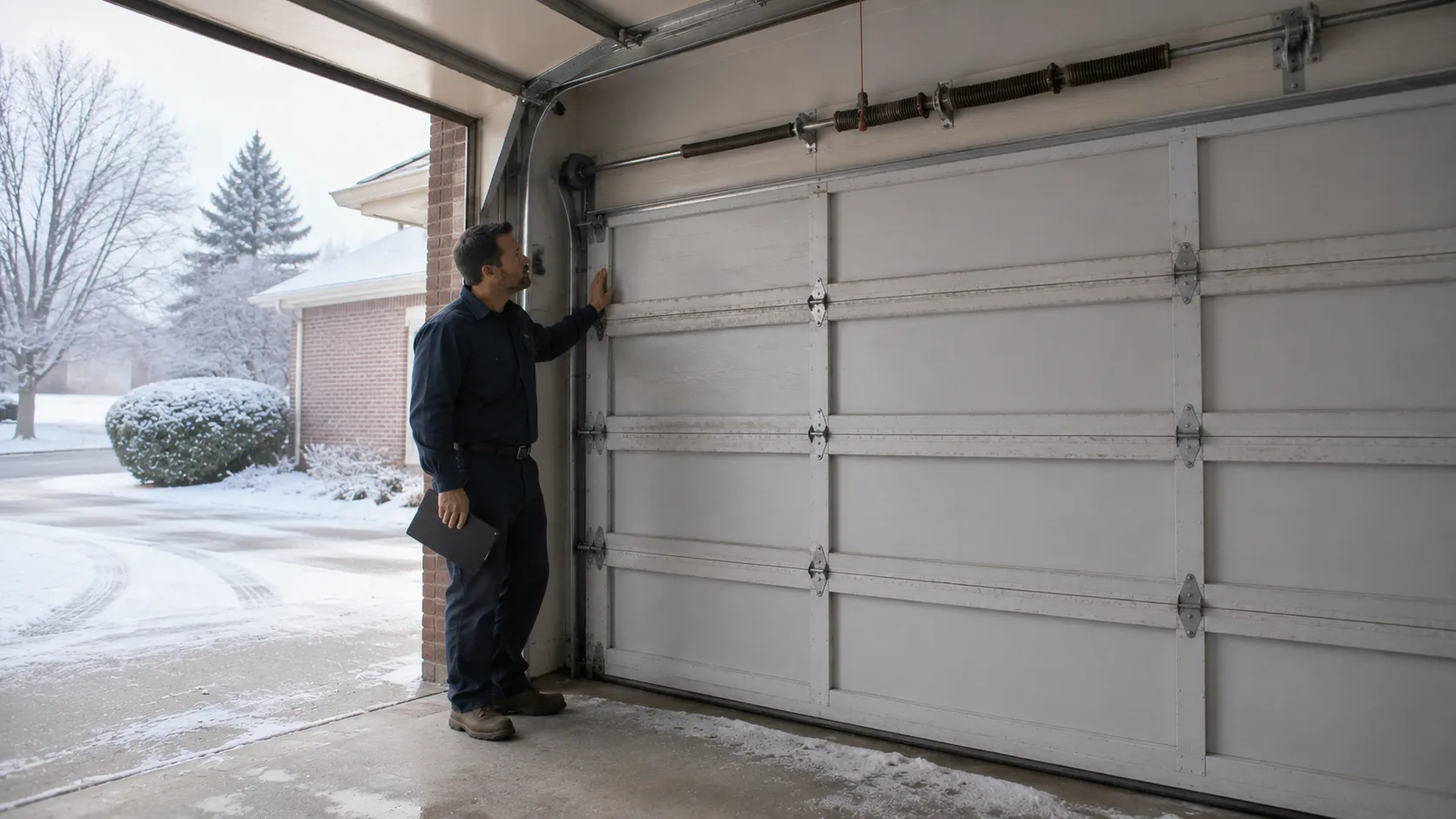
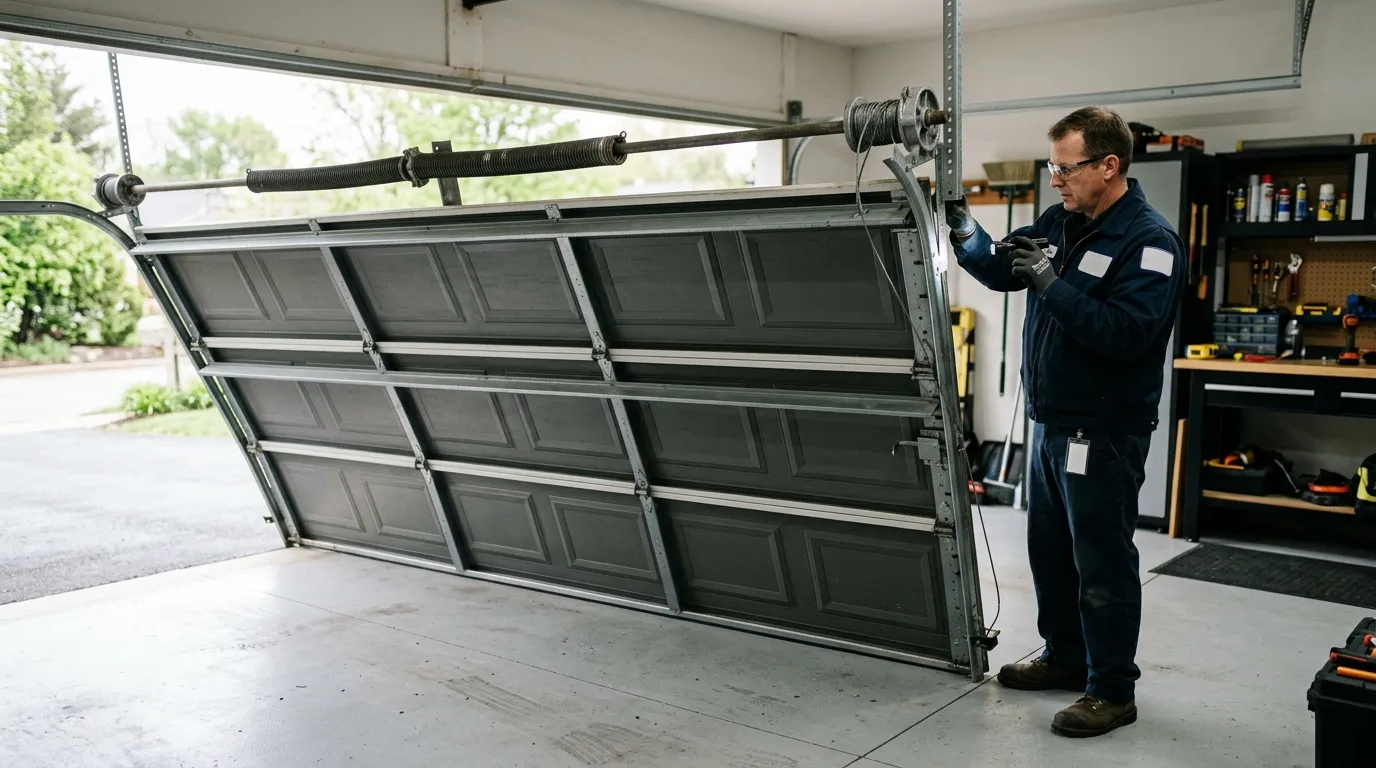
Tightening a loose bracket or lubricating hinges is fine to do yourself. A torsion spring is not - the spring on a standard double door is wound under enough tension to break a bone or worse, and we don't recommend homeowners touch it even to inspect it closely. If the noise is coming from the spring area (that bang, or a slow grinding hiss as the door lifts), that's a call, not a project. Cable fraying is the other one: if you see a strand sticking out on the cable running down to the bottom bracket, stop using the door until it's replaced. Everything else - a squeaky hinge, a track that needs realigning, a sensor that's out of position - is reasonable to check yourself first. Our honest limitation here: we don't do same-day spring replacement on every call if the part isn't one we carry on the truck for your door's spring size, so if you hear that bang on a Friday afternoon, don't assume next-day service is automatic. Ask when you call.
What You Pay
We don't publish flat prices here because spring size, door weight, and opener model all change the number, and guessing at a price without seeing the door does homeowners no favors. What we can tell you is that Frisco sits in an area with a median household income near $116,974 and a housing stock dominated by 2000s-era construction, which means most of the calls we run are on similar-generation doors with similar-generation failures - torsion springs, roller sets, and opener logic boards from the same handful of manufacturers that supplied builders here. That consistency is actually good for you: it means the tech coming to your house has likely replaced the exact spring size or opener model on a house two streets over. Ask for the number before the work starts, not after.
How Local Conditions Play In
Frisco sits in a moderate-heat climate band, which is easier on garage door hardware than a true extreme-heat zone but still puts real stress on certain parts. Nylon rollers and opener drive belts age faster under repeated summer heat cycling than they would somewhere cooler, and steel springs lose a bit of temper strength over years of expanding and contracting in the heat of an attached garage. That's part of why springs on houses built in the early 2000s are showing up on our call list now rather than in another decade. It's not a coastal-storm or heavy-snow situation - we're not dealing with ice-jammed tracks or salt corrosion - so the noises we hear here skew toward heat-fatigued springs and heat-softened rollers rather than weather-jammed mechanisms. If you're calling in from one of the surrounding communities - Paloma Creek, Oak Point, Cross Roads, Lake Dallas, or the smaller pockets like Chapel Creek just south of us - the same housing-age pattern generally holds, since most of this area built out on a similar timeline.
Talk to a local pro
Garage door trouble in Frisco?
Same-day service with honest, upfront quotes.