Garage Door Opener Repair, Frisco TX in Frisco

Frisco, TX

Garage Door Opener Repair, Frisco TX

Opener repair for Frisco homes built 1985-2015, where board and belt failures follow a predictable pattern tied to age and heat. Same service area, real numbers.

Serving Frisco, TXBackground-checked techsHonest, upfront pricingFast local response
1985–2015
Typical build years of local homes
53K
Owner-occupied homes in the area
78K
Households in the area
$116K
Median household income

Pricing

What You Pay

We aren't going to hand you a number here that isn't backed by a real diagnosis, because opener repair cost depends on what actually failed. A logic board swap costs more than a sensor realignment, and a stripped gear on a chain-drive unit costs less than a full belt-drive replacement.

What Actually Failed

What we can tell you is what drives the range: age of the unit, whether the manufacturer still makes the part, and whether the fix is a component swap or a full opener replacement. Those factors matter more than the brand name on the housing.

Discontinued Boards Push Toward Replacement

Most of the openers we pull off walls in this service area came in with houses built between 1985 and 2015, with 2002 as the rough midpoint. That means a lot of units are old enough that the control board is discontinued, which pushes some repairs toward replacement instead of a part order.

We'll Say When Repair Isn't Worth It

We'll tell you straight if a repair isn't worth it against a new unit's cost - that's not upselling, it's math. Paying labor to chase a hard-to-find part on a unit already near the end of its life rarely saves money over time.

Patterns We Already Know

With 52,521 owner-occupied houses across this area, we see the same handful of failure patterns over and over. That volume is why we can usually name the likely cause on the phone before we're on site, which saves you a diagnostic visit in a lot of cases.

Warning signs

What You Are Seeing

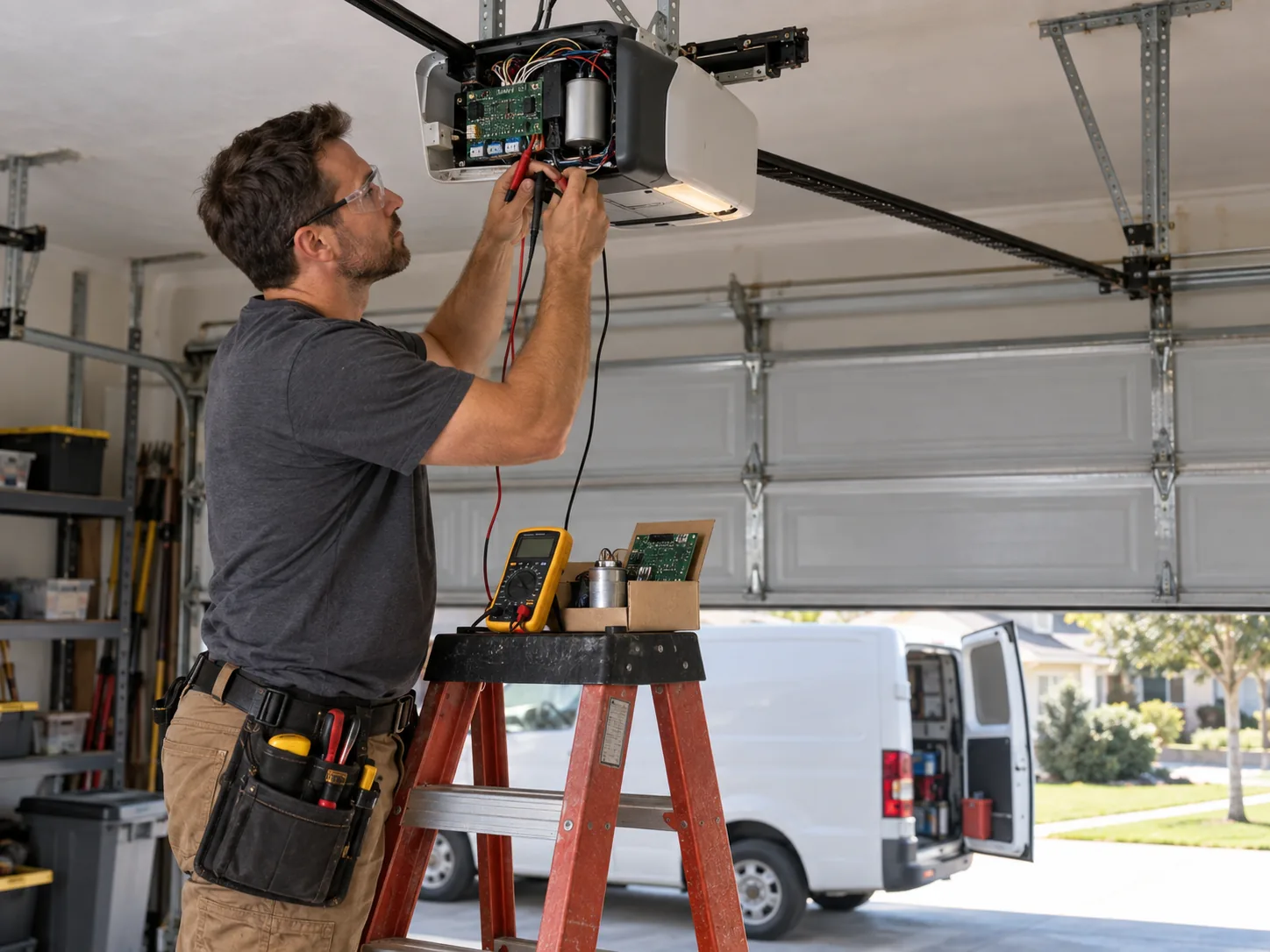
The most common call is a door that hums but doesn't move - that's almost always a stripped gear inside the opener housing or a capacitor that's given out on the circuit board. We ask what year the house was built before we ask what's wrong, because it narrows down the likely part.

Hums But Doesn't Move

The most common call is a door that hums but doesn't move - that's almost always a stripped gear inside the opener housing or a capacitor that's given out on the circuit board. Second most common: the door reverses right before it hits the floor, which points to a misaligned or dirty safety sensor.

Remote Range Shrinking

A remote that used to work from the driveway and now only works standing at the door usually means the antenna wire inside the unit has come loose, or the receiver board is failing. It's a gradual symptom that most owners notice slowly rather than all at once.

Flashing Lights, No Response

Lights that flash but the door doesn't respond is the unit telling you it caught a fault code - on most residential units that's an obstruction sensor issue or a limit switch out of adjustment. It looks alarming but is often a quick fix once we know the code.

Belt-Drive Vs Chain-Drive Wear

Belt-drive openers, common in homes built after the late 1990s in this area, tend to fail differently than the older chain-drive units still running in older houses nearby - belt stretch and pulley wear versus chain slack and rust.

DIY or pro

Doing It Yourself

Some of this is fair game for a homeowner with a ladder and a Saturday, and a few checks cost nothing but a little time. Past those basics, though, opening the unit itself is where well-meaning fixes tend to go sideways.

  1. Clean The Photo-Eye Sensors

    Cleaning the photo-eye sensors with a soft cloth and checking that they're aimed at each other and not knocked out of alignment is reasonable, free, and worth doing regularly. A dirty or misaligned sensor causes more nuisance reversals than any other single part.

  2. Tighten The Mounting Bracket

    Tightening the mounting bracket if the opener's shifted on the ceiling is another safe, simple task that takes a few minutes with a ladder and a wrench. It stops rattling and keeps the unit from working itself further loose over time.

  3. Stay Out Of The Housing

    What isn't worth doing yourself is opening the opener housing to replace a board, adjusting the force or limit settings without knowing what you're changing, or working near the drive gear while the unit is plugged in. We've seen fingers and units both get damaged by well-meaning fixes that went sideways.

  4. Expect A Wait On Rare Parts

    Here's the honest limit on what we do: we don't stock parts for every opener brand and every production year on the truck. If your unit's old enough that the manufacturer discontinued the board, we may need to order it, and we'll tell you that up front instead of after we've already opened the housing.

Local causes

Why It Happens Here

This area's housing stock runs mostly 1985 to 2015, with the bulk of it dating to the early 2000s. That puts a large share of openers somewhere between 10 and 25 years old right now - past the point where belts, gears, and capacitors are expected to hold up under daily use.

The heat band here is moderate but real, and it does specific damage to opener electronics: circuit boards mounted on garage ceilings sit in the hottest air in the house for a good chunk of the year, and that heat cycling is hard on solder joints and capacitors over a couple decades. Belt-drive units lose tension faster in that kind of heat too, which shows up as a door that starts slow or hesitates partway up.

With 77,529 households in the area and a median income of $116,974, a lot of these houses were built with mid-range openers rather than commercial-grade units, which means the parts weren't built for 20-plus years of daily cycling in Texas heat. That's not a knock on the builders - it's just what the housing stock is, and it's why opener failure here tends to cluster around the same age range instead of being random.

Why It Happens Here

Questions

Common questions

How do I know if it's the opener or the door itself?

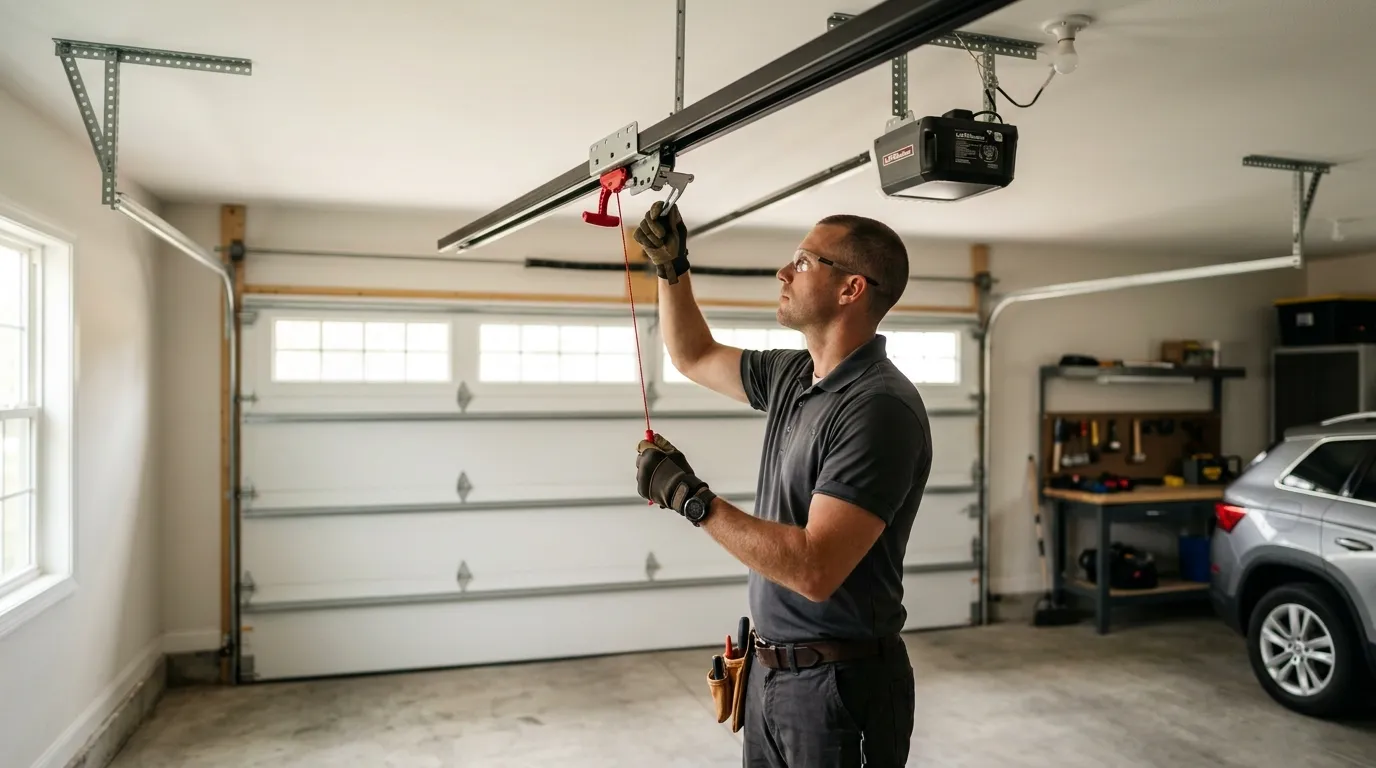
If the door moves smoothly by hand when disconnected from the opener (pull the red release cord), the door and springs are fine and the problem is electrical or mechanical inside the opener unit. If the door is heavy or uneven by hand, that's a spring or track issue, not an opener repair.

Can you fix any opener brand?

We work on most residential brands, but parts availability depends on the unit's age and manufacturer. Some older boards are discontinued, which can mean an order delay or a recommendation to replace rather than repair. We'll tell you which situation you're in before we start.

Is it cheaper to repair or replace an old opener?

Depends on what's broken and how old the unit is. A sensor or gear repair is usually worth it. A board failure on a unit already 15-20 years old often isn't, since you're paying labor plus a hard-to-find part for a unit near the end of its life anyway.

Why does my opener work fine in the morning but act up in the afternoon?

Heat. Circuit boards and capacitors can behave erratically once they warm up through the day, especially in an attached garage that traps afternoon heat. It's a common sign of an aging board rather than a wiring problem.

Ready when you are

Need a garage door sorted in Frisco?

Frisco Garage Door Co repairs and installs garage doors, springs and openers in Frisco, TX and the surrounding area.

CallGet a quote