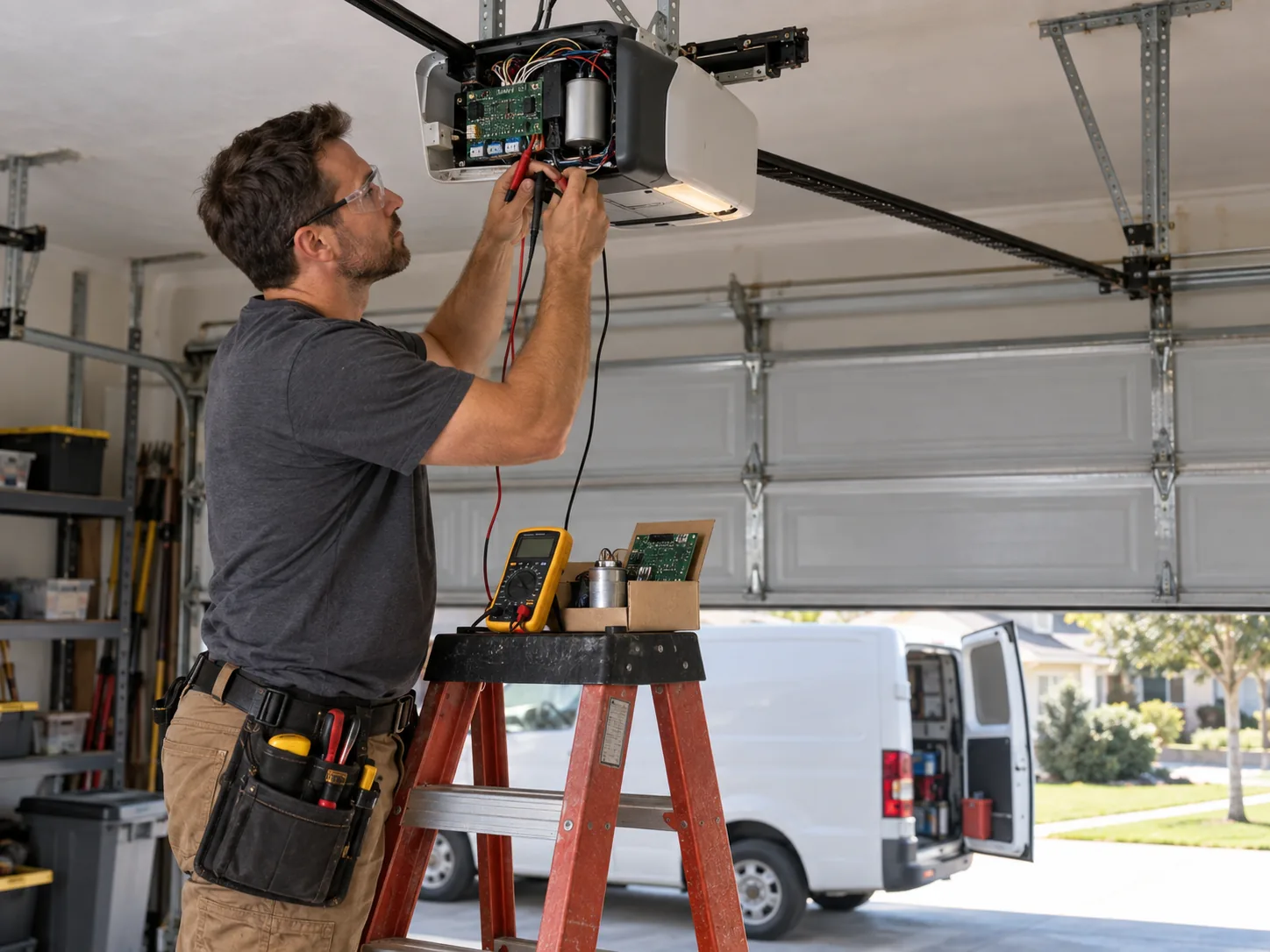
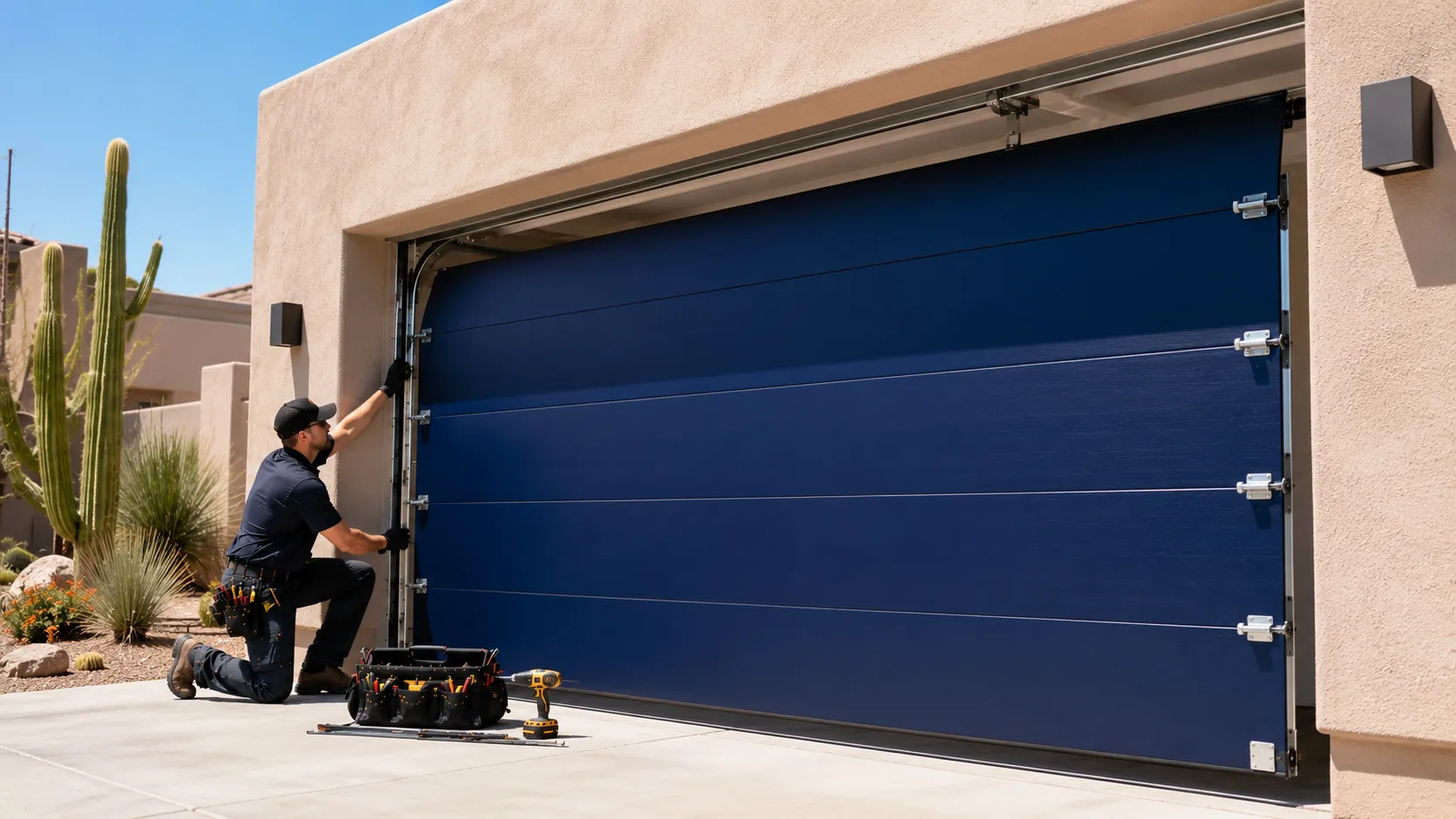
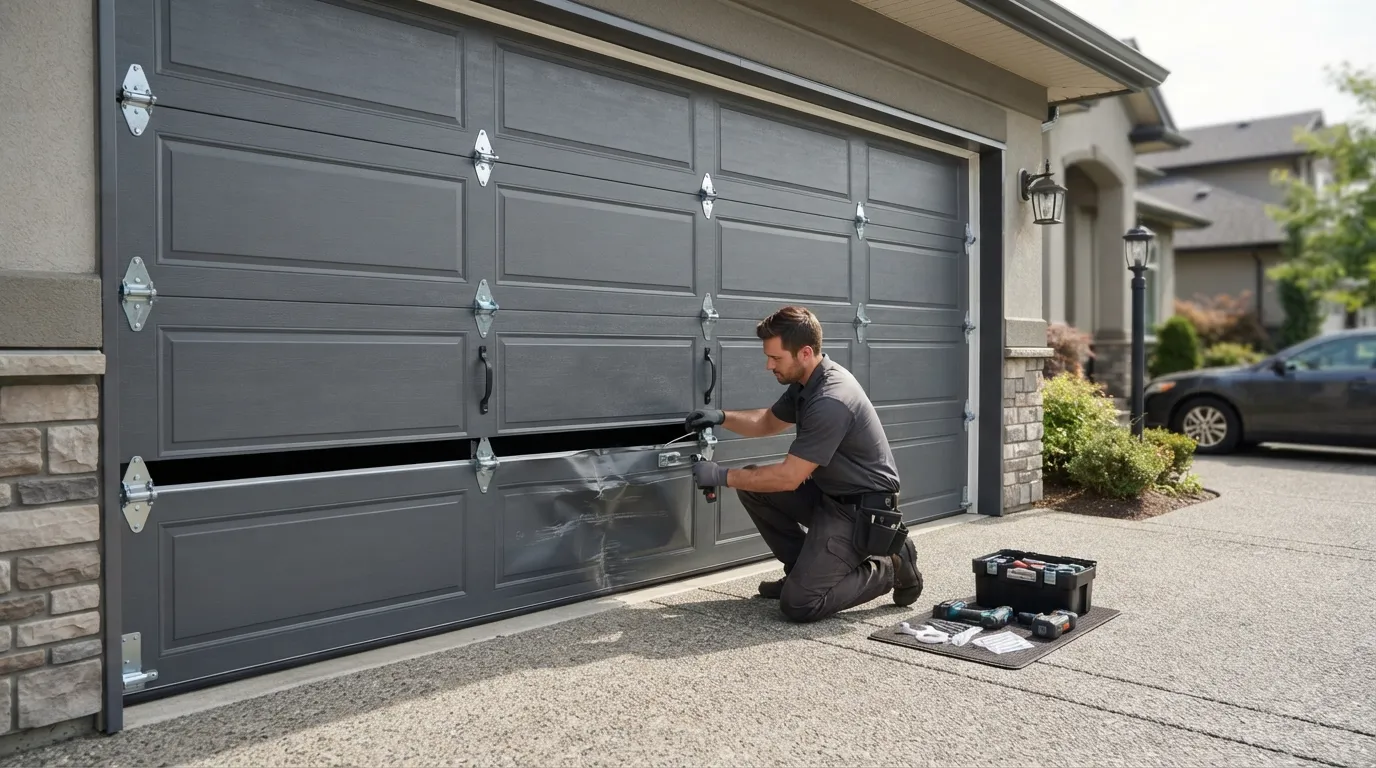
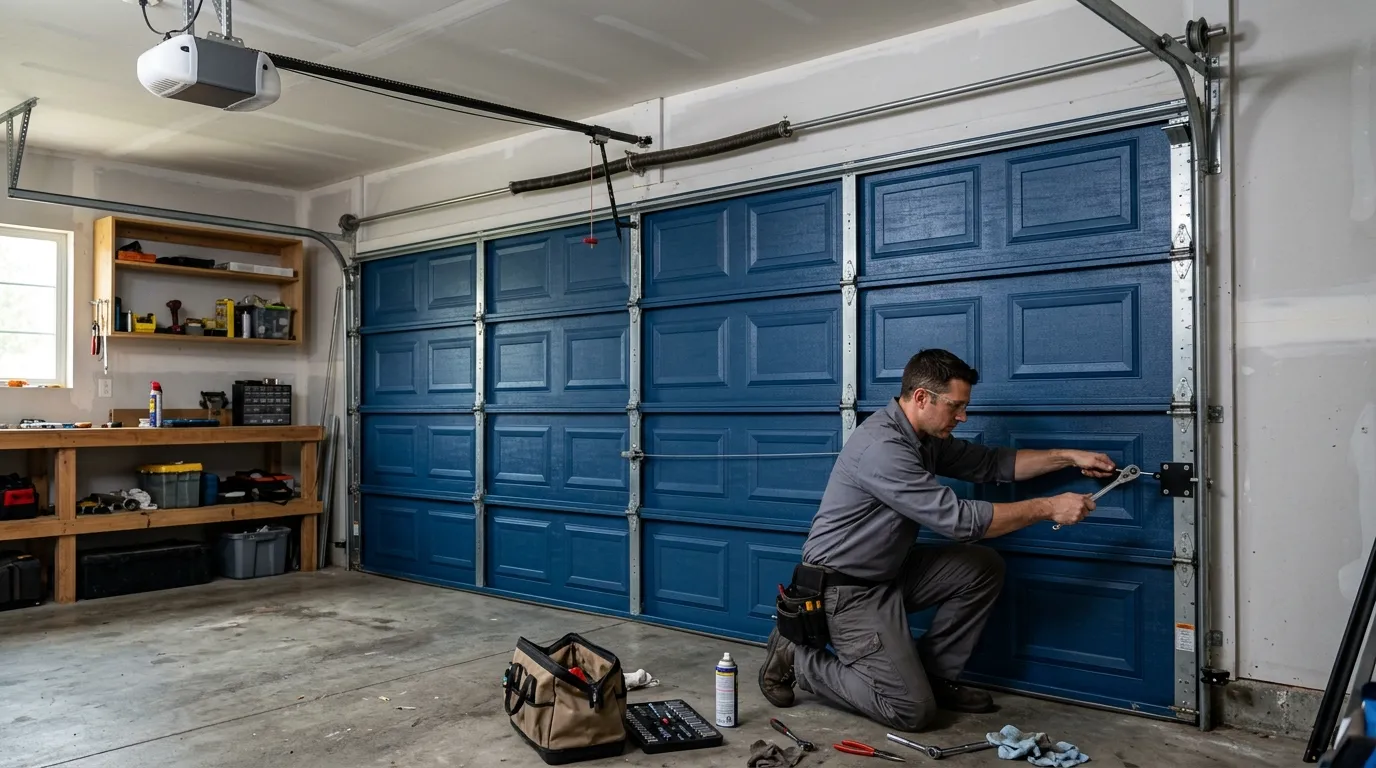
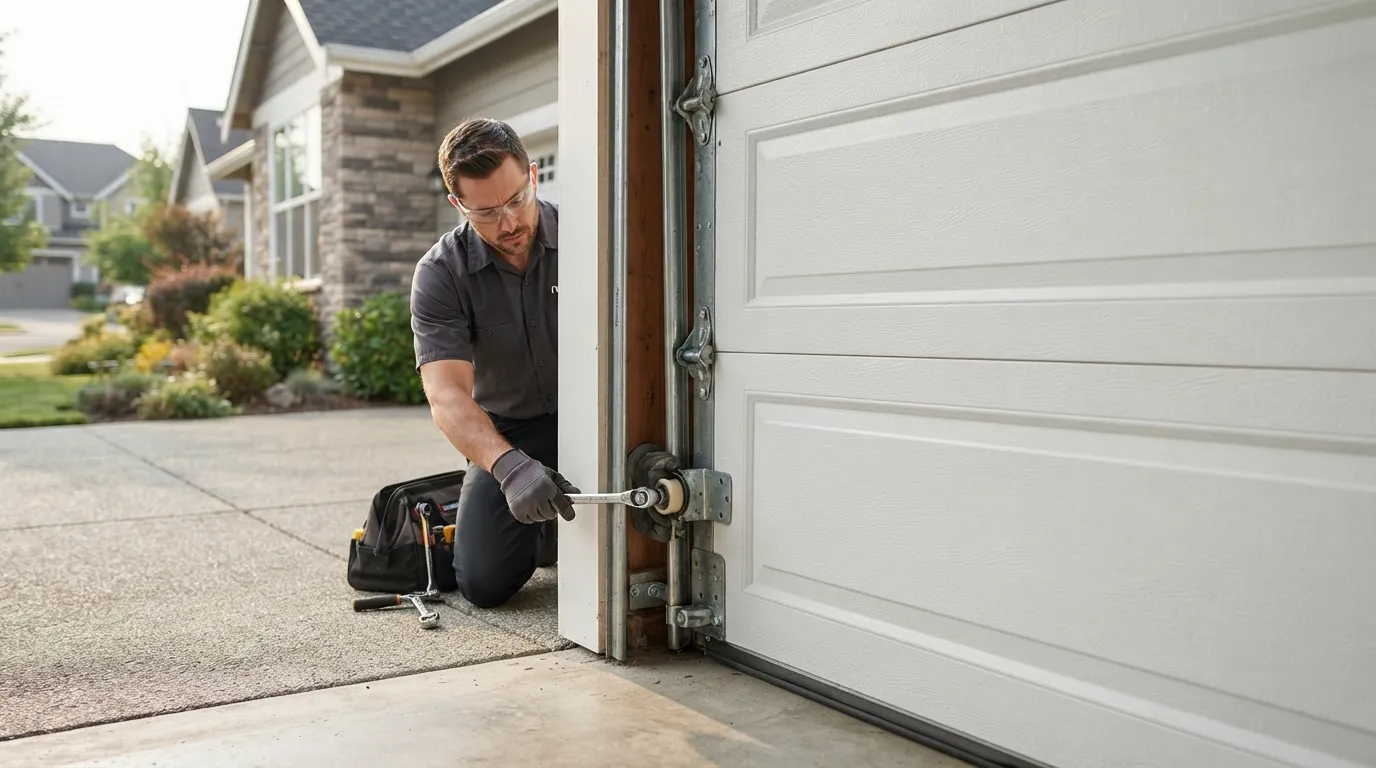
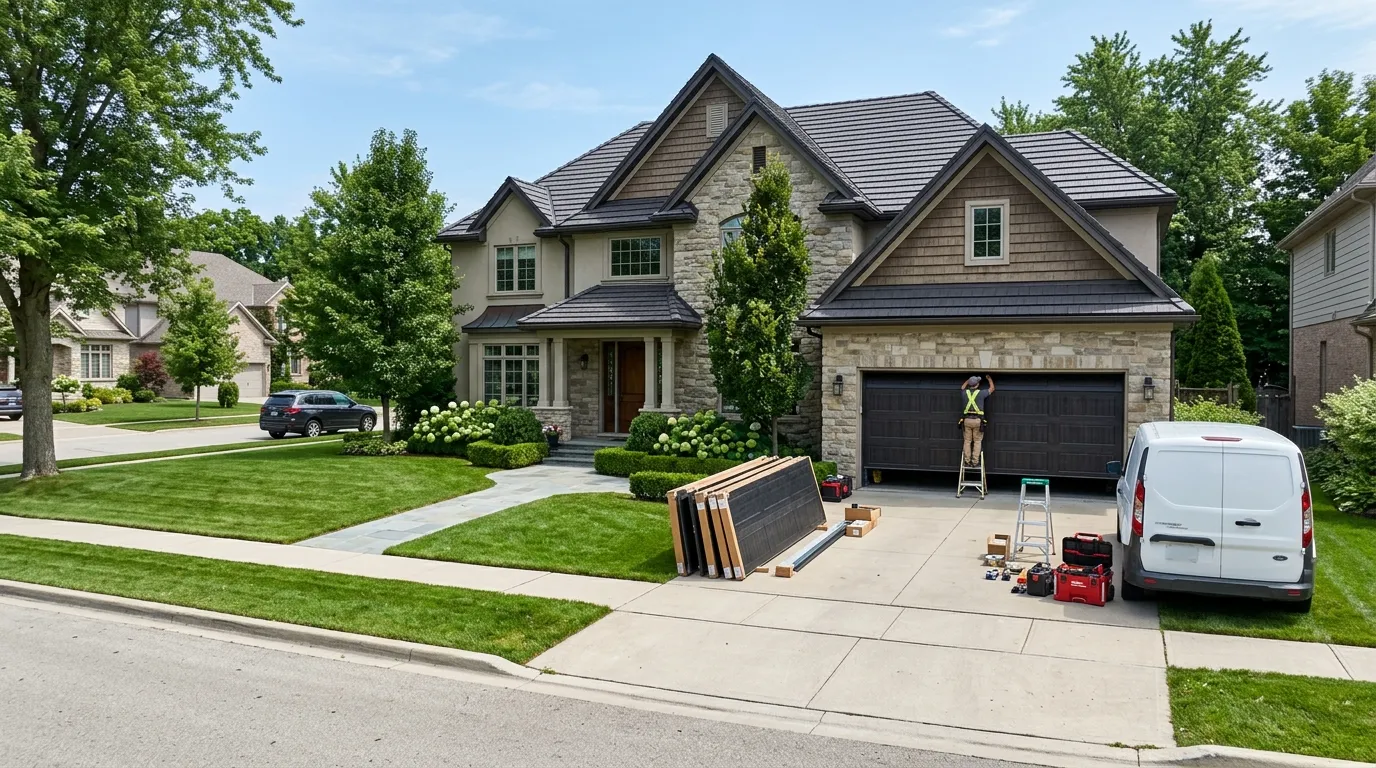
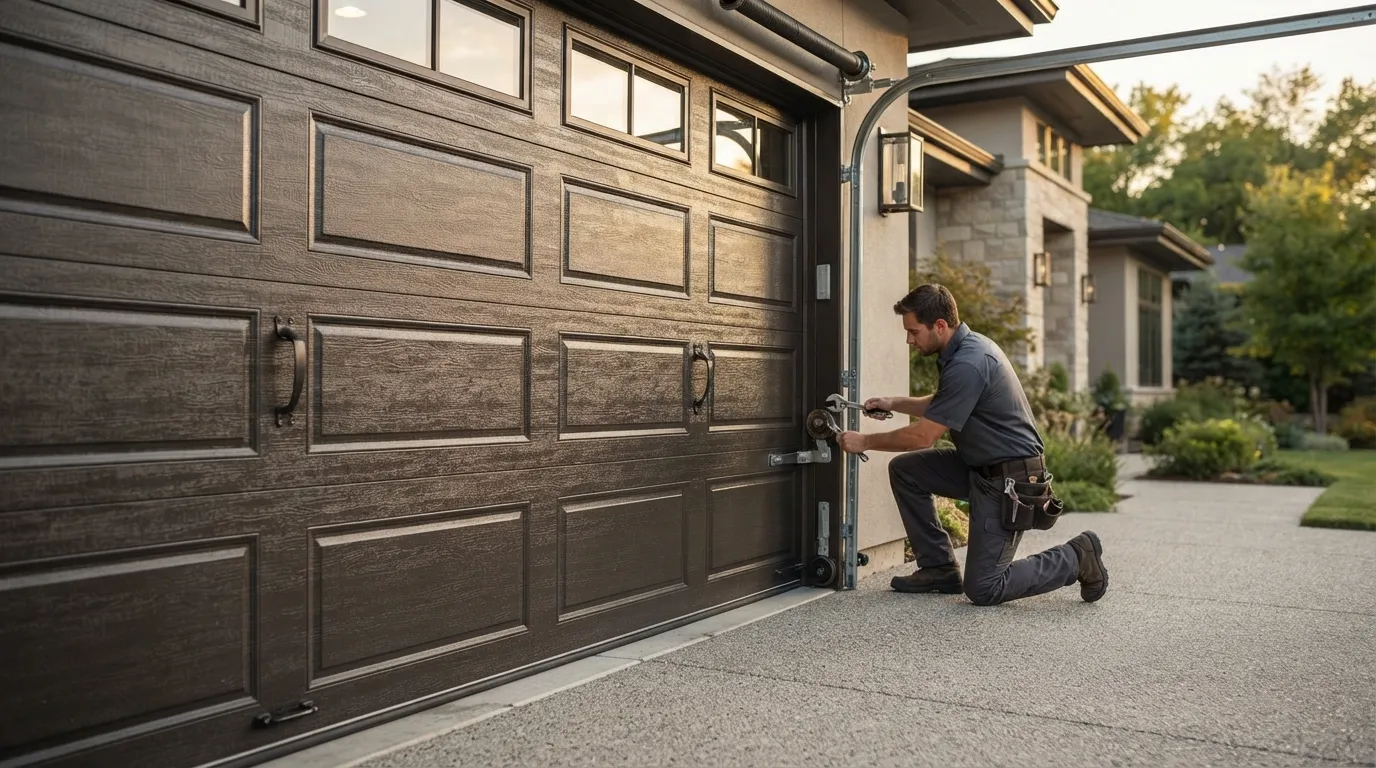
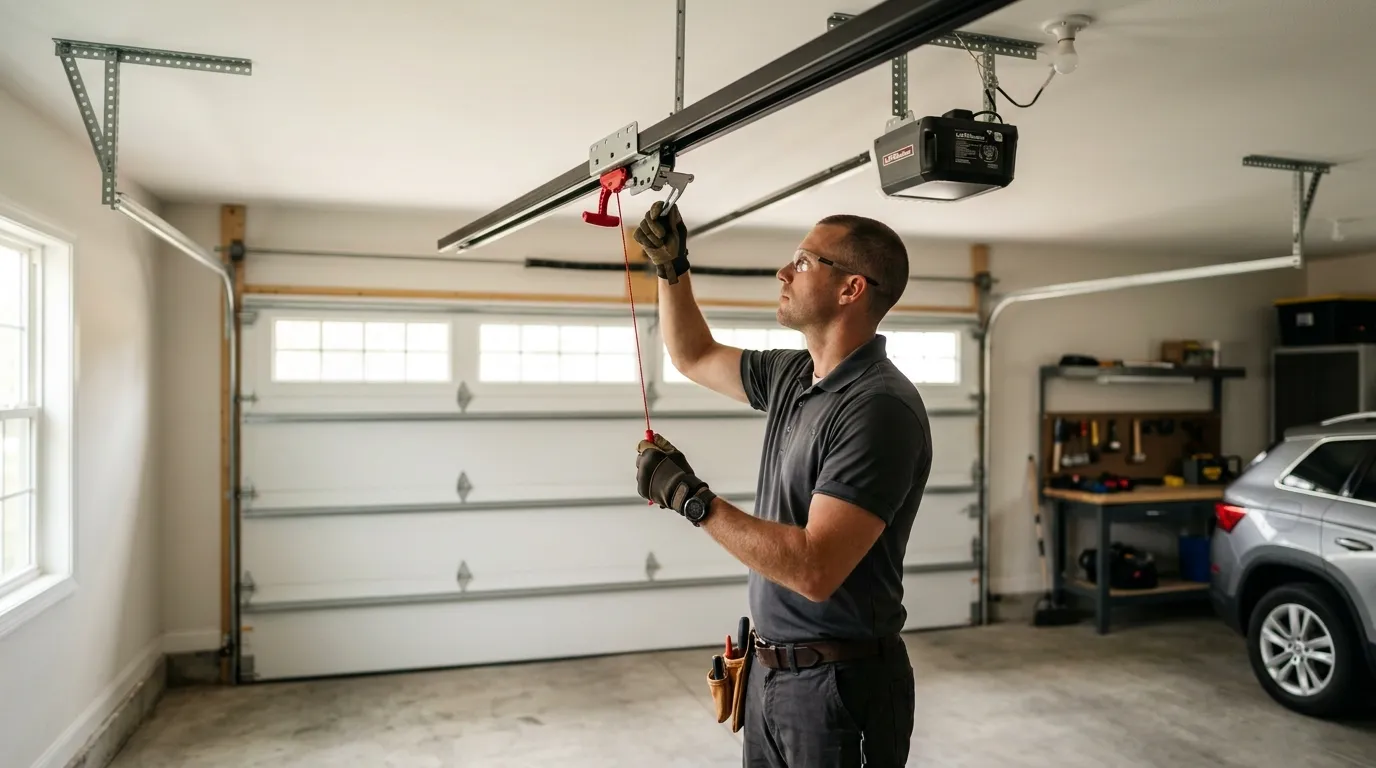
This service area sits in a moderate-heat climate band, and that matters for how springs and opener gears age. Summer heat cycles metal and plastic parts through daily expansion and contraction, and over enough years that shortens the working life of a torsion spring compared to a milder climate. Combine that with the housing stock - most of it built between 1985 and 2015, with a median build year around 2002, spread across roughly 26 named neighborhoods and communities in the region - and you get a large number of garages hitting the same failure window at close to the same time. Across the broader area, which covers around 77,529 households and 52,521 owner-occupied houses, a lot of those doors still have their original builder-grade torsion springs and openers, parts chosen for cost at construction, not for a 25-year service life. With a median household income of $116,974 across this area, most homeowners here choose to replace a failed spring or opener outright rather than nurse it along, which is part of why we see more full-unit swaps than patch jobs. The towns and unincorporated areas in this region - from Paloma Creek and Oak Point a few miles out to Aubrey, Corinth, and Pilot Point further afield - share this same housing-age and climate profile, which is why the failure pattern looks so consistent from one to the next.