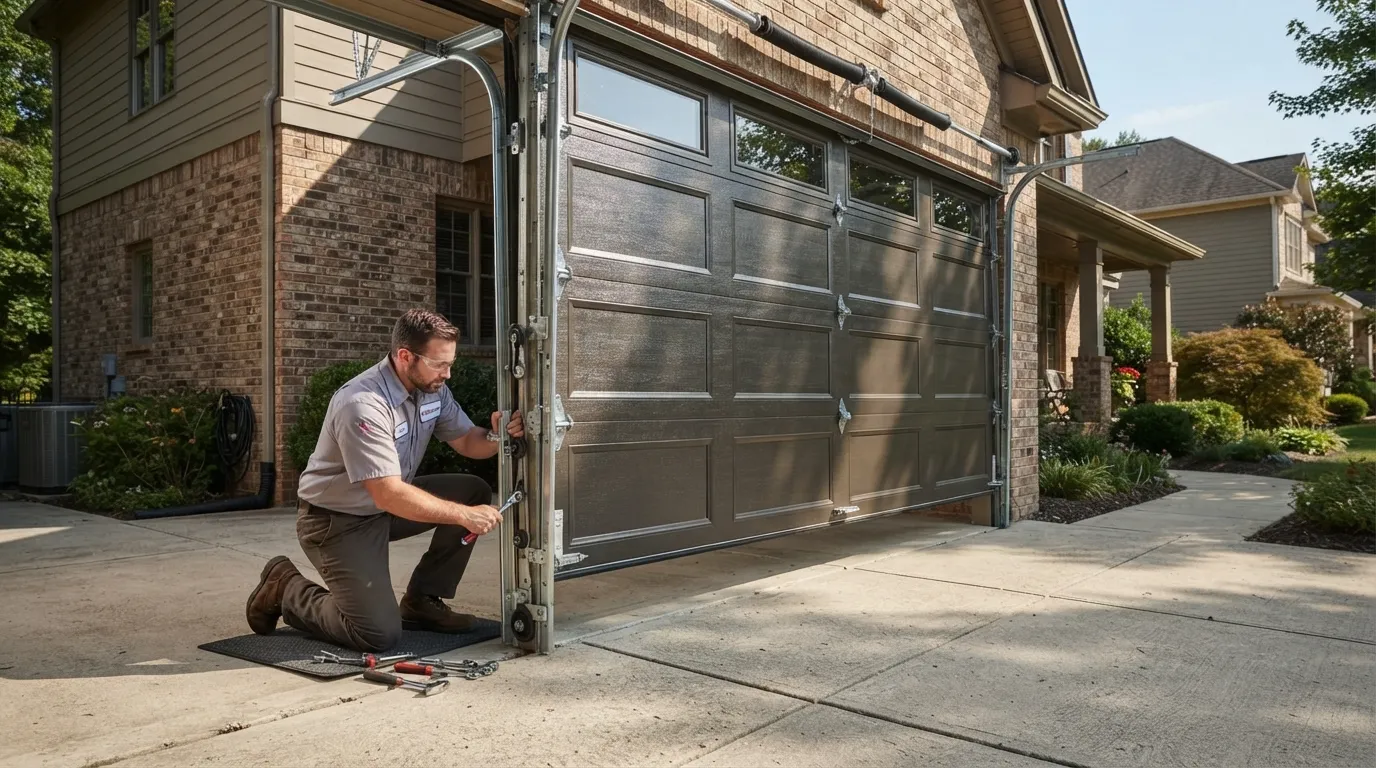
Garage Door Opener Repair, Lucas TX in Frisco

Lucas, Frisco

Garage Door Opener Repair, Lucas TX

Opener repair for Lucas, TX homes built mostly around 2002. We travel 14 miles from Frisco to fix chain, belt, and screw-drive openers in this small, newer-build town.

Serving Frisco, TXBackground-checked techsHonest, upfront pricingFast local response

Watch-outs

What Can Go Wrong

Lucas is a small town by household count, just under 2,724 of them, and most of what's here went up around 2002 - so the openers we get called out to are almost never ancient chain-drive units, but mid-2000s belt and screw-drive models, often the same builder-grade brand repeated across a dozen streets.

Worn Drive Gears

Worn drive gears on the belt units are one of the failures that shows up most on Lucas openers from this era. Because one developer often used one supplier across a whole subdivision, the same gear tends to fail at roughly the same age house to house.

Logic Boards Giving Out

Logic boards give out after 15-20 years of daily cycling, and because so many Lucas openers share the same builder-grade brand, we've usually seen the identical board fail two streets over. That consistency actually helps diagnosis rather than making it harder.

Safety Sensors Drifting Out of Alignment

Safety sensors drift out of alignment over time and throw a blinking light instead of closing the door, which is one of the more common calls we get regardless of which specific opener brand is installed. It's rarely the sensor itself failing, just the bracket shifting.

Cracked Wall Control Panels

Wall control panels from this era also crack at the mounting screws before anything electronic actually goes wrong inside the opener itself. It's a cosmetic-looking failure that's easy to mistake for something more serious, and it's a cheap fix once it's identified correctly.

Job timing

Time on the Job

We come out of Frisco, 14 miles away, so there's no local branch sitting around the corner from your driveway. That drive is built into how the day works, not into a promise about how fast we show up - we're not going to state a response window we can't back with a fact. What we can tell you is that once a truck is in Lucas, most opener jobs on a 2002-era house are quick, because the wiring and mounting hardware from that build year is standardized. A sensor realignment or a logic board swap on one of these units doesn't turn into an all-day excavation the way it can on a much older door with hand-modified brackets. Bigger jobs - full opener replacement, or a drive system that's seized and pulled the header bracket loose - take longer, and we'll tell you that on the spot rather than guess over the phone.

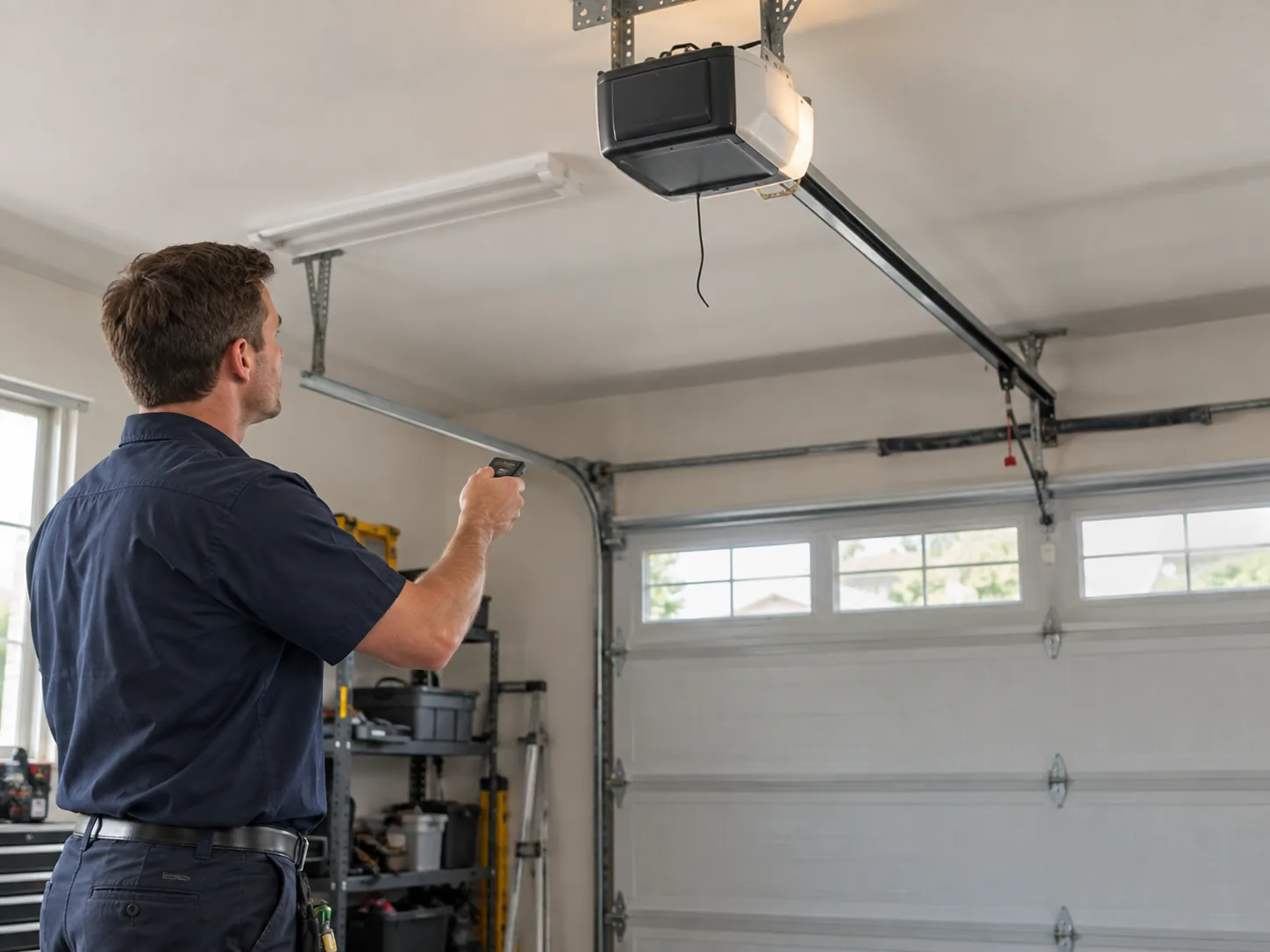
Time on the Job

The repair

What the Repair Takes

Most Lucas openers we work on are belt or screw drive, chain-drive being less common given the build era, and that changes what's in the truck. Belt drives need the belt itself plus the drive gear it rides on; screw drives need the correct-pitch screw carriage, which isn't universal across brands.

  1. Bring the Right Drive Parts

    Belt drives need the belt itself plus the drive gear it rides on; screw drives need the correct-pitch screw carriage, which isn't universal across brands. Knowing which drive type is on the door before the truck rolls keeps the job to one visit.

  2. Assess the Logic Board

    Logic boards are the other big-ticket part - when one dies, the whole opener head sometimes gets replaced rather than repaired, depending on age and part availability. That decision is made on the specific opener, not a blanket rule.

  3. Check Sensor Alignment First

    Sensor pairs are the cheap, fast fix: a knocked-loose bracket from a stray basketball or a car bumper is common enough that we check alignment on almost every call before touching anything electronic. It's often the whole fix, not just a first step.

  4. Tell You Honestly When a Part Isn't Available

    If your opener is a discontinued model and the manufacturer has stopped stocking boards for it, we're not going to pretend a part exists that doesn't. In that case replacement is the real answer, not a patch that fails again in six months.

What You Pay

Pricing

What You Pay

We don't have a published price list for opener repair specific to Lucas, and we're not going to invent one here. What we can say is that Lucas households run a median income of $178,403, well above the broader service area median of $116,974, which tends to shift what people choose when a repair-versus-replace decision comes up - more Lucas customers opt for a new opener with battery backup or smart-phone connectivity rather than patching a fifteen-year-old unit back together. That's a homeowner choice, not a sales pitch from us; a straightforward sensor or logic board repair is often the cheaper and perfectly sound option, and we'll say so when it is.

Doing It Yourself

DIY or pro

Doing It Yourself

Realigning safety sensors is genuinely a DIY-friendly job on most 2002-era openers in Lucas - loosen the wing nut, nudge the bracket until both LEDs go solid, tighten it back down. Reprogramming a remote or keypad is usually a button-hold sequence printed right on the opener head. Where we'd stop you: anything involving the logic board, the drive gear, or the travel limit settings on a screw-drive unit. Get those wrong and you can strip a gear or send the door slamming past its stop point, which turns a $40 part into a $300 one. If the opener runs but the door doesn't fully close, check the sensors first - it's the single most common false alarm we get called out for.

Warning signs

What You Are Seeing

A few signs point to specific opener problems more often than not, and some of them are worth checking yourself first. Working through them in order before calling can save a truck roll for something that isn't a repair at all.

Light Blinks but Door Won't Move

If the light blinks but the door won't move, that's almost always a sensor misalignment, not a motor problem. Check for anything blocking the sensor eyes before calling anyone out - it's a free check that solves the problem outright fairly often.

Grinding or Humming with No Movement

A grinding or humming noise with no door movement points to a stripped drive gear, common on belt-drive units once they pass the mid-teens in age. That noise without movement is a strong sign the gear, not the motor, has given out.

Reverses Immediately on Closing

A door that opens fine but reverses immediately on closing usually means the down-limit setting has drifted, which happens gradually on screw-drive openers and needs a reset rather than a new part. It's one of the cheaper fixes we make once we're on site.

Opener Runs Completely Silent

If the opener runs completely silent - no light, no hum, nothing - check the outlet and breaker before assuming the unit itself is dead. It's a five-minute check that saves a truck roll for something that isn't a repair at all.

Questions

Common questions

Do you have a branch in Lucas?

No. We run out of Frisco, about 14 miles away, and cover Lucas from there. There's no local depot, so we're upfront that we can't quote a guaranteed arrival window - just that the drive is part of how any job here gets scheduled.

Why do so many Lucas openers seem to be the same brand and age?

Most Lucas housing went up around 2002 as part of larger development pushes, and builders during that era commonly used a single opener supplier across whole subdivisions. That's why failures often repeat house to house - the same board or gear giving out at roughly the same age.

Is it worth repairing an opener from that era or should I replace it?

Depends what's failed. A sensor or wall control is almost always worth repairing. A dead logic board on a discontinued model, where parts are no longer stocked, usually tips the decision toward replacement rather than a repair that won't hold.

Ready when you are

Need a garage door sorted in Frisco?

Frisco Garage Door Co repairs and installs garage doors, springs and openers in Frisco, TX and the surrounding area.

CallGet a quote